
Obsidian Metadata
| url | https://www.theduchy.com/shinju/#pics |
| author | TheDuchy |
| published | 2018-07-03 |
| description | The Shinju is a classic chest harness, known and practiced by riggers throughout the world, is simple, secure and, when applied properly, can be used for suspension. |
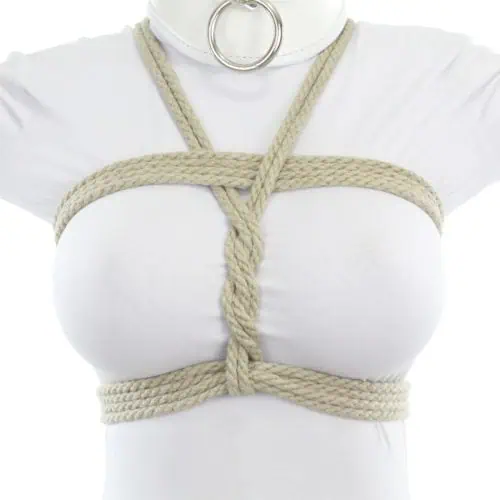
This classic chest harness, known and practiced by riggers throughout the world, is simple, secure and, when applied properly, can be used for suspension. Using this as your primary upper-body suspension attachment harness means that your partner’s weight is supported by their rib cage and not their arms, reducing the risk of radial nerve injury so common with the standard TK (Takate Kote). Also check out the Suspension Shinju, an update that is even more interconnected and good for suspension.
This tie can also be used for breast bondage: Make the upper and lower chest straps very tight, then use the line that goes between the breasts to cinch the upper and lower chest straps together, thereby trapping and accenting the breasts. Other breast bondage techniques can be found in the Cross-your-heart Breast Harness and the Cinch & Wrap Breast Bondage tutorials
The video shows the more classic method of building the top strap first. The pictorial version shows an alternate where we build from the lower strap first.
Notes: If you plan to use this for suspension, make sure the lower strap is not too low. You don’t want it around just the lower ribs; the ribs in the center and upper chest are much stronger and more able to safely hold a person’s weight.
If you are tying a larger body–doesn’t matter if it is due to muscle or fat–you need more support or it will become unbearable quite quickly, so add more wraps to the upper and lower straps. Instead of stopping with 2 as I do here, add 3, 4 or even 5. If you need more rope, just extend it 🙂
For this tie, I used one 30′ (~9m) piece of Natural 6mm provided by my affiliate Twisted Monk. But my model is quite small and you may need more.
Video

We wrap below so that the tail will naturally flow upward once we lock off the first strap
Note that the rope is naturally leading toward the left shoulder in this case, so that is where we will take it next…
We want to keep a separation here so that forces are distributed across more ribs.
+367