Obsidian Metadata
| type | source |
| url | https://hamel.dev/notes/llm/evals/flashcards/ |
| authors | Hamel Husain, Shreya Shankar |
| published | 2025-11-30 |
Source: Evals Flashcards
URL: https://hamel.dev/notes/llm/evals/flashcards/ (downloaded into _attachments/)
| # | Card | Key idea | Vault note |
|---|---|---|---|
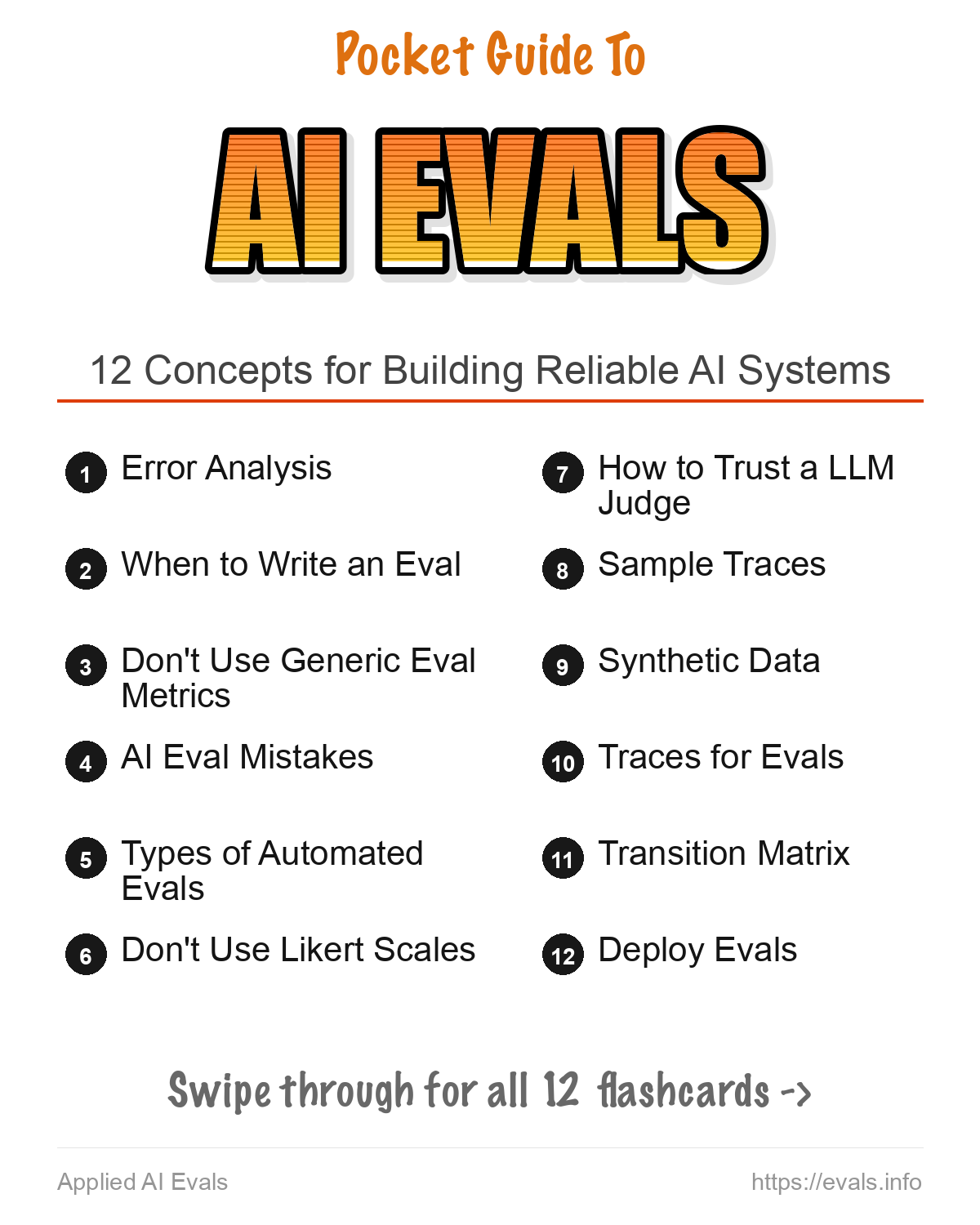
| 0 | Cover / TOC | – | – |
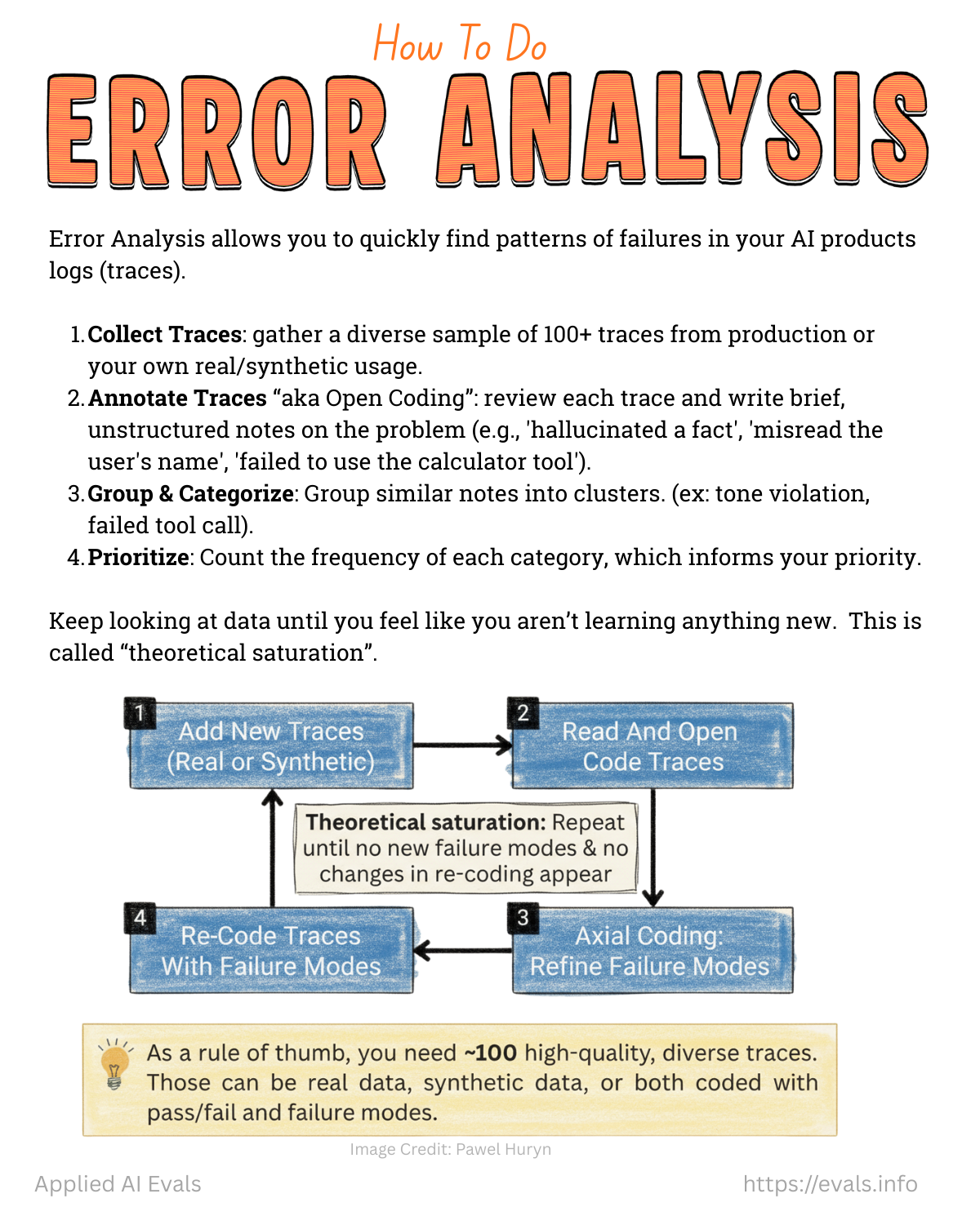
| 1 | Error analysis | Open → axial coding → saturation | Error Analysis |
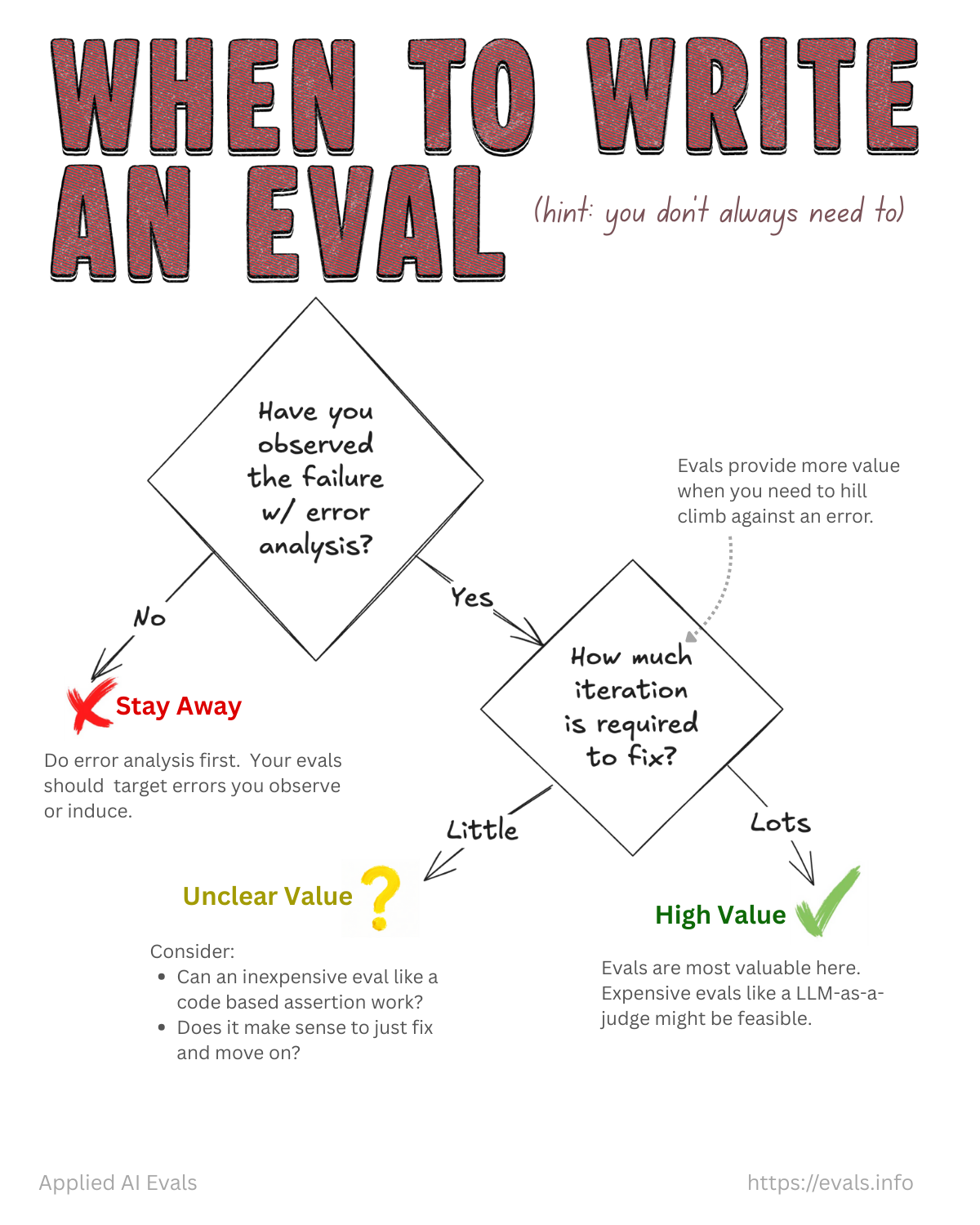
| 2 | When to write an eval | Observed? → iteration needed? → value | When to Build an Automated Evaluator |
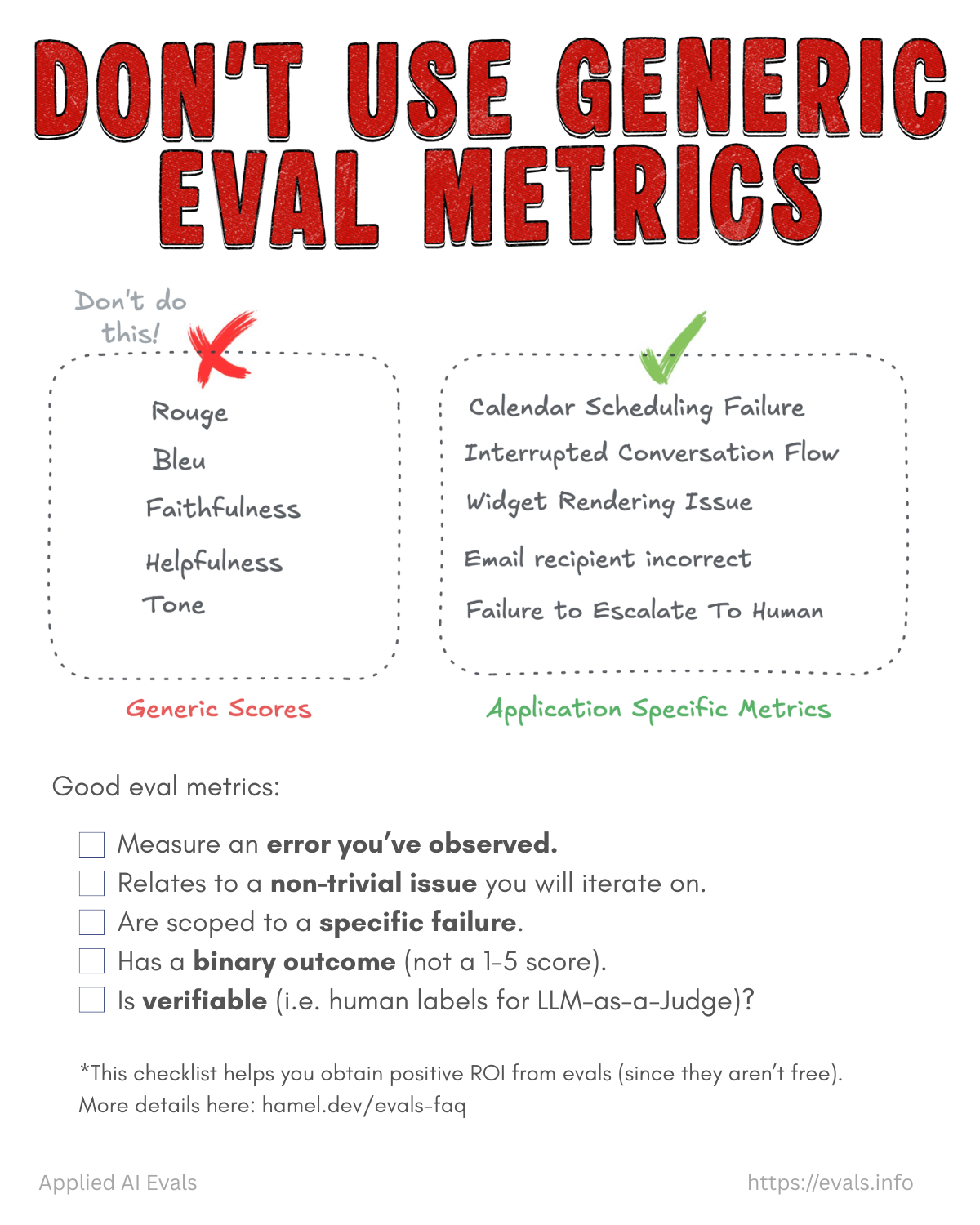
| 3 | Don’t use generic eval metrics | – | Generic Metrics |
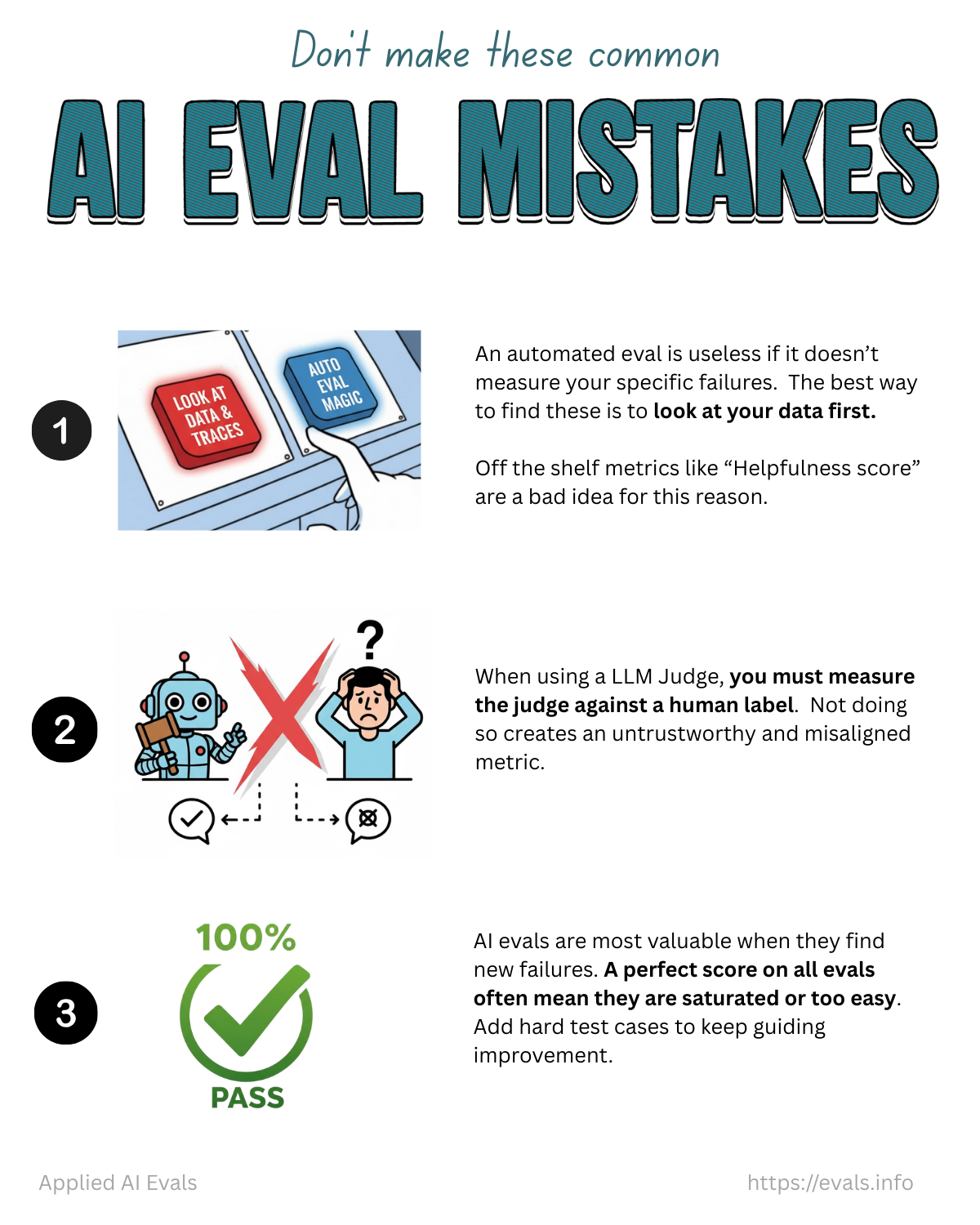
| 4 | AI eval mistakes | Look at data first · measure the judge vs human labels · 100% means saturated or too easy | Eval Playbook |
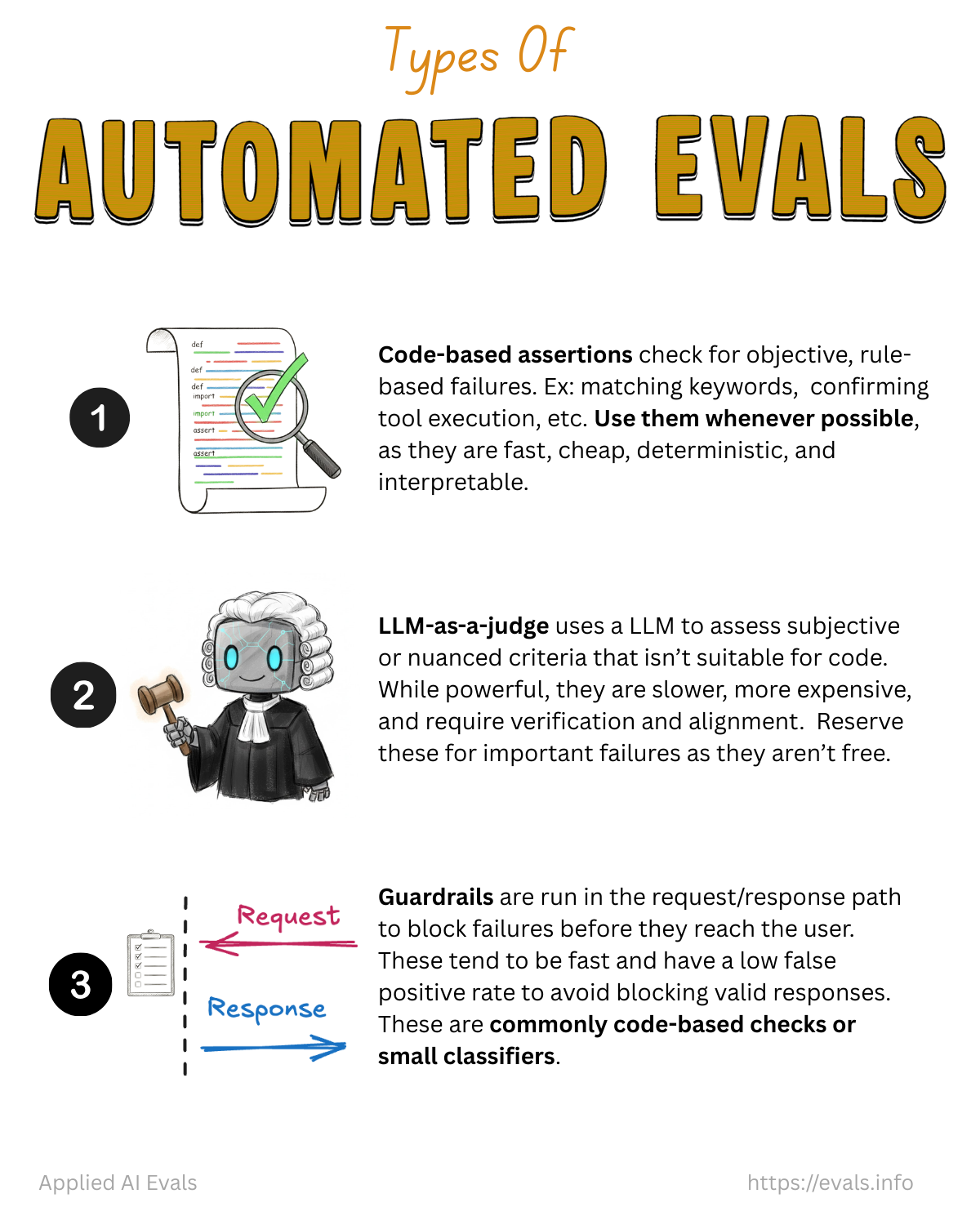
| 5 | Types of automated evals | Code assertions (use whenever possible) · LLM judge (slower, costly, needs alignment) · guardrails (fast, low FP, code or small classifiers) | LLM-as-Judge |
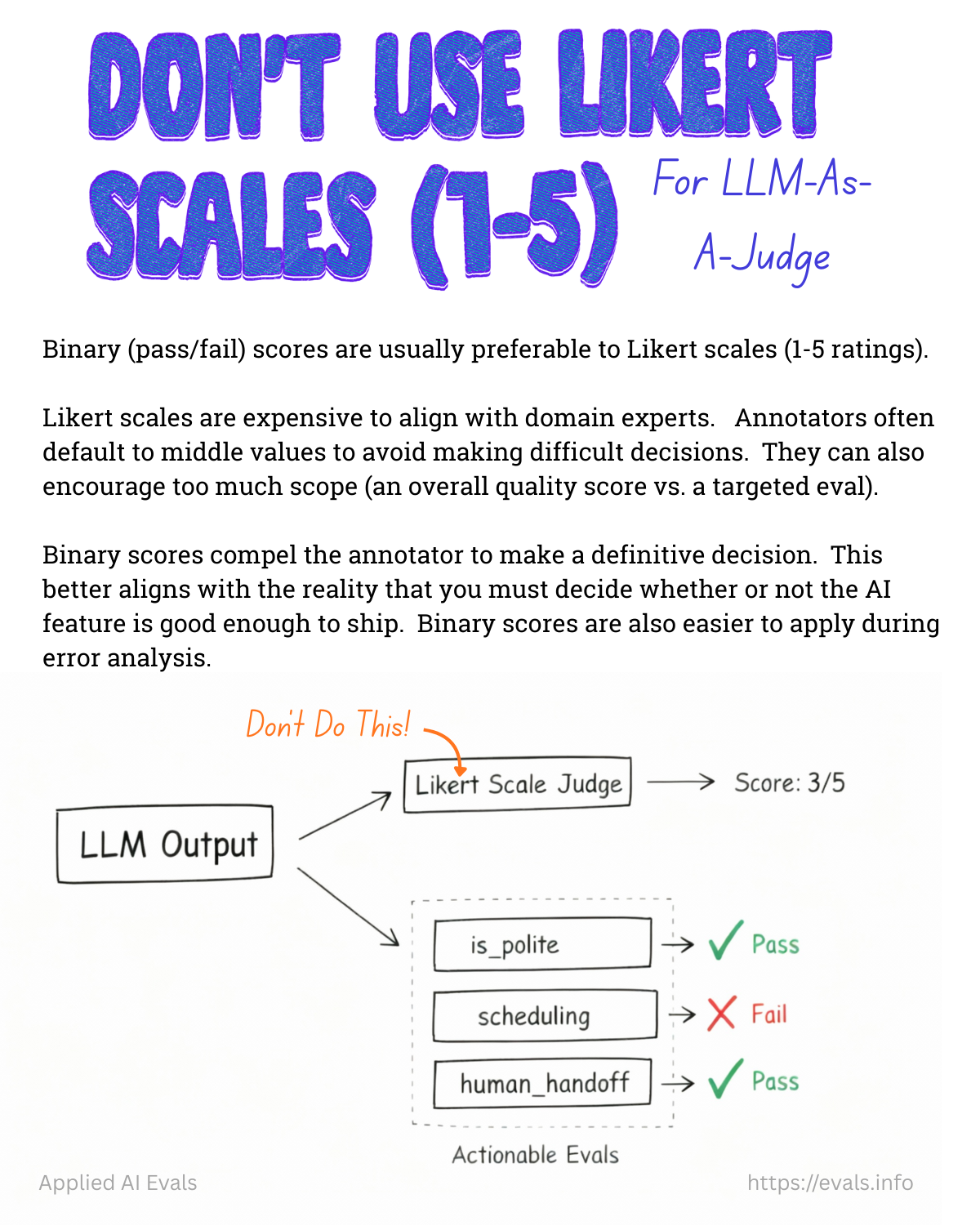
| 6 | Don’t use Likert scales | – | Binary Pass-Fail vs Likert Scales |
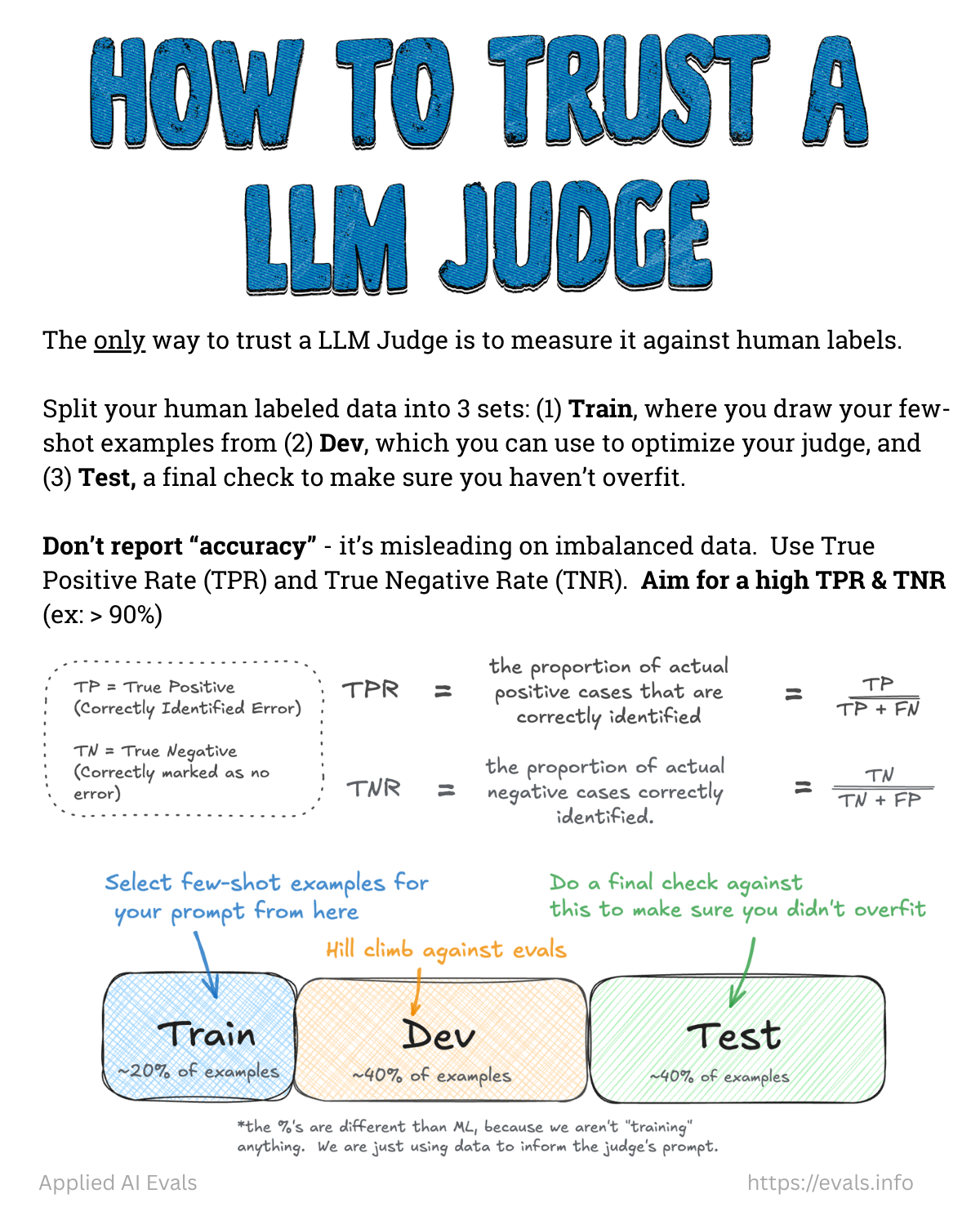
| 7 | How to trust an LLM judge | Train ~20 / dev ~40 / test ~40; TPR and TNR > 90%; no accuracy | Judge Validation |
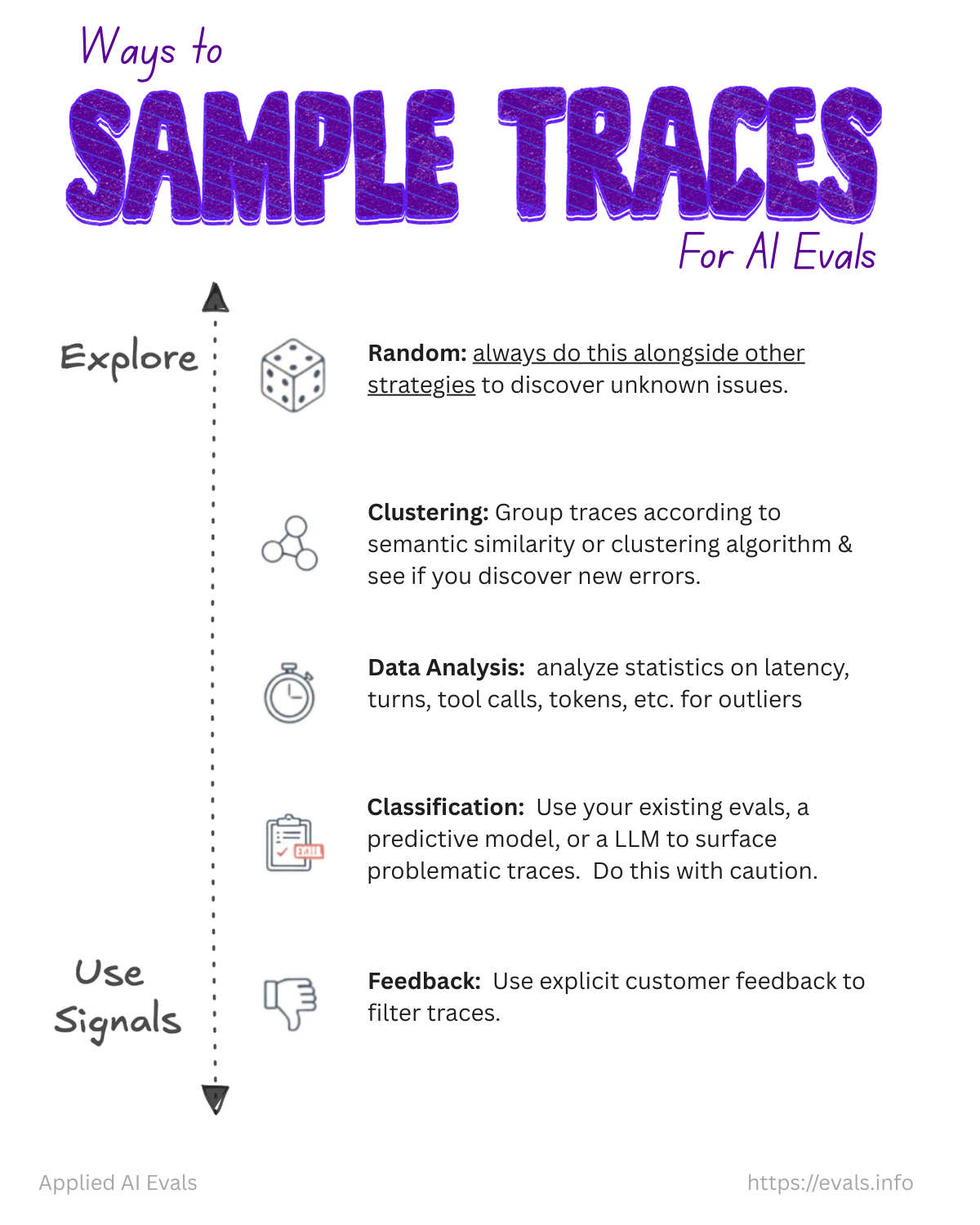
| 8 | Sample traces | Random, clustering, data analysis, classification, feedback | Trace Sampling Strategies |
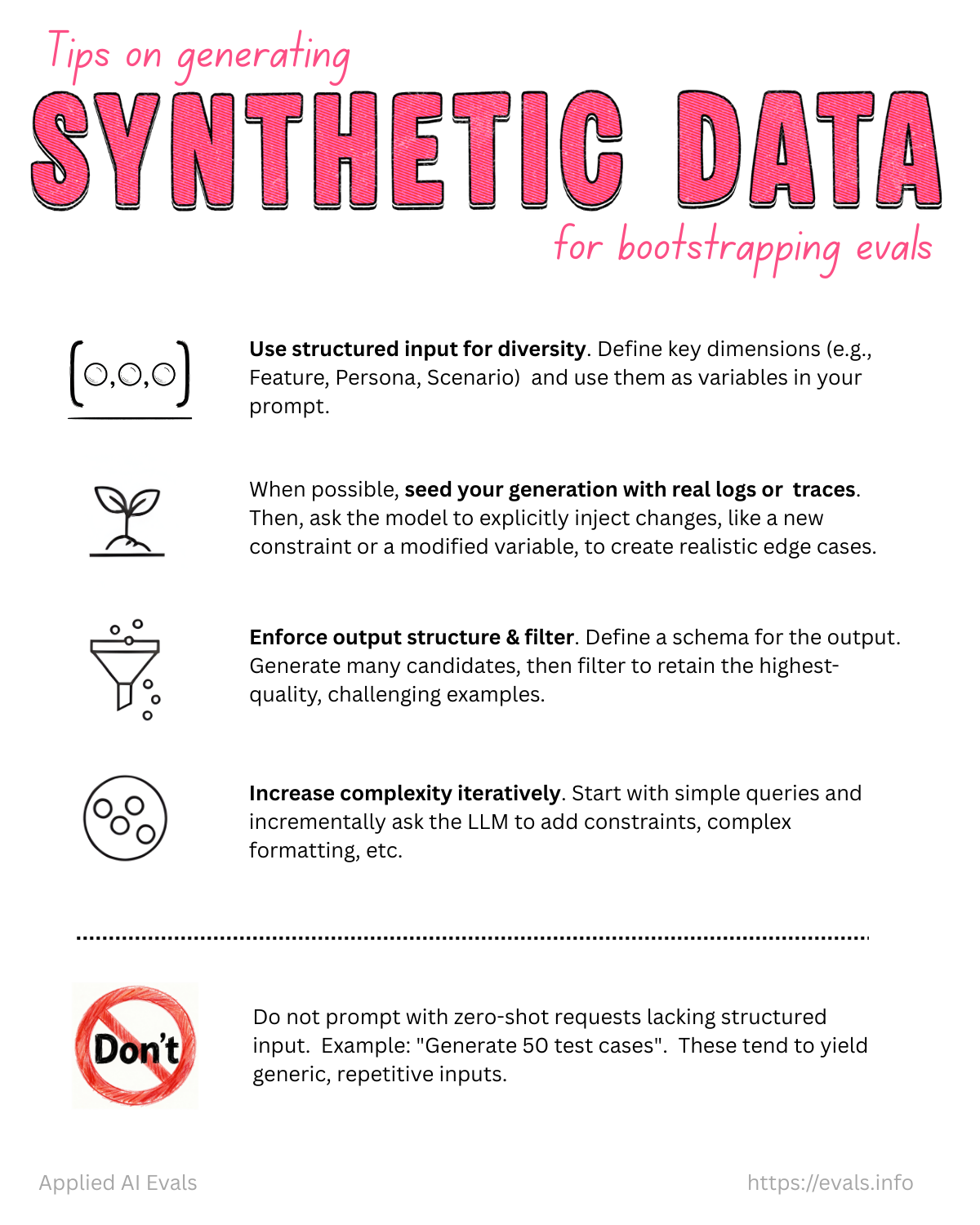
| 9 | Synthetic data | Dimensions → tuples → queries | Synthetic Data |
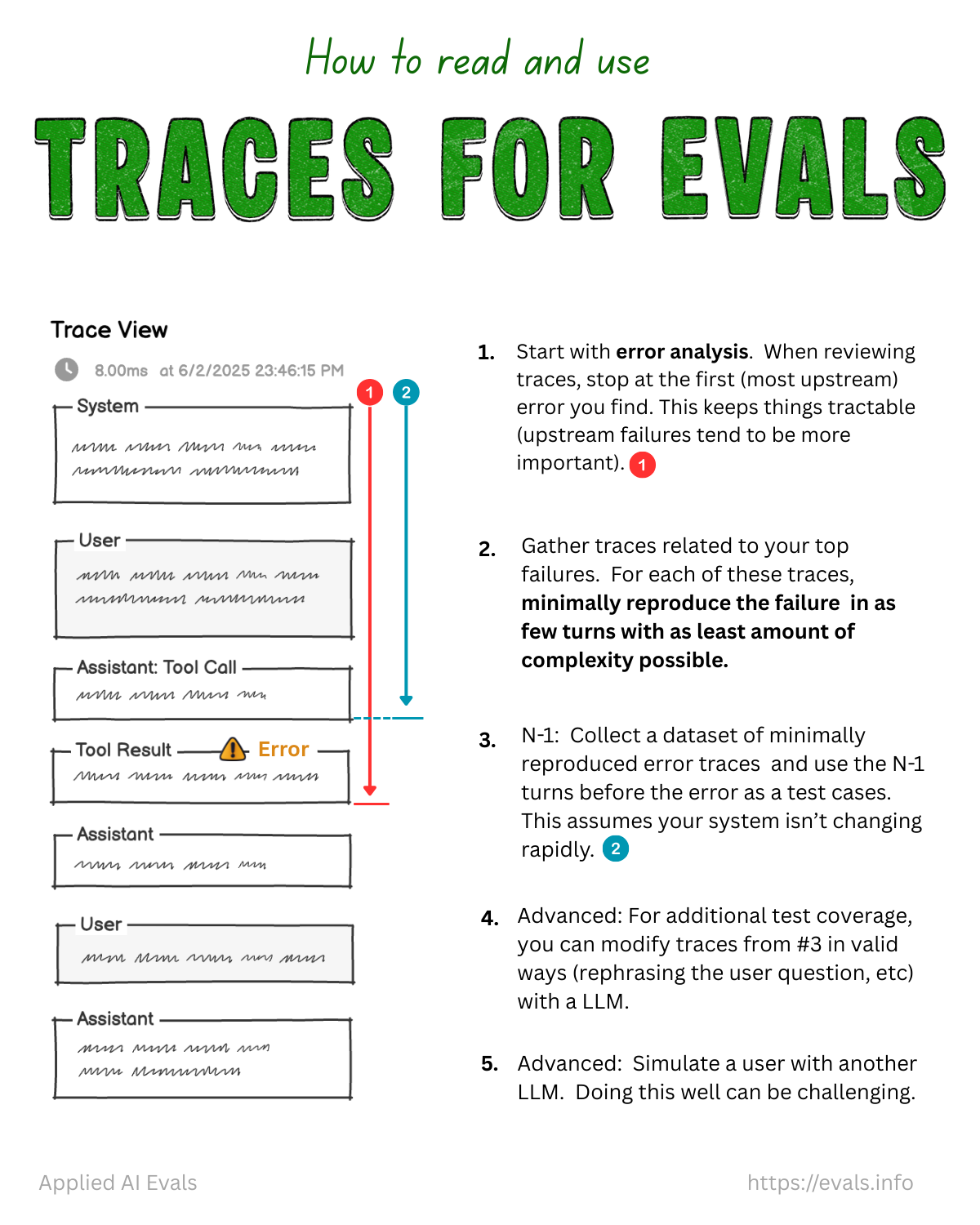
| 10 | Traces for evals | First upstream error · minimal repro · N-1 · perturb · simulate | Traces |
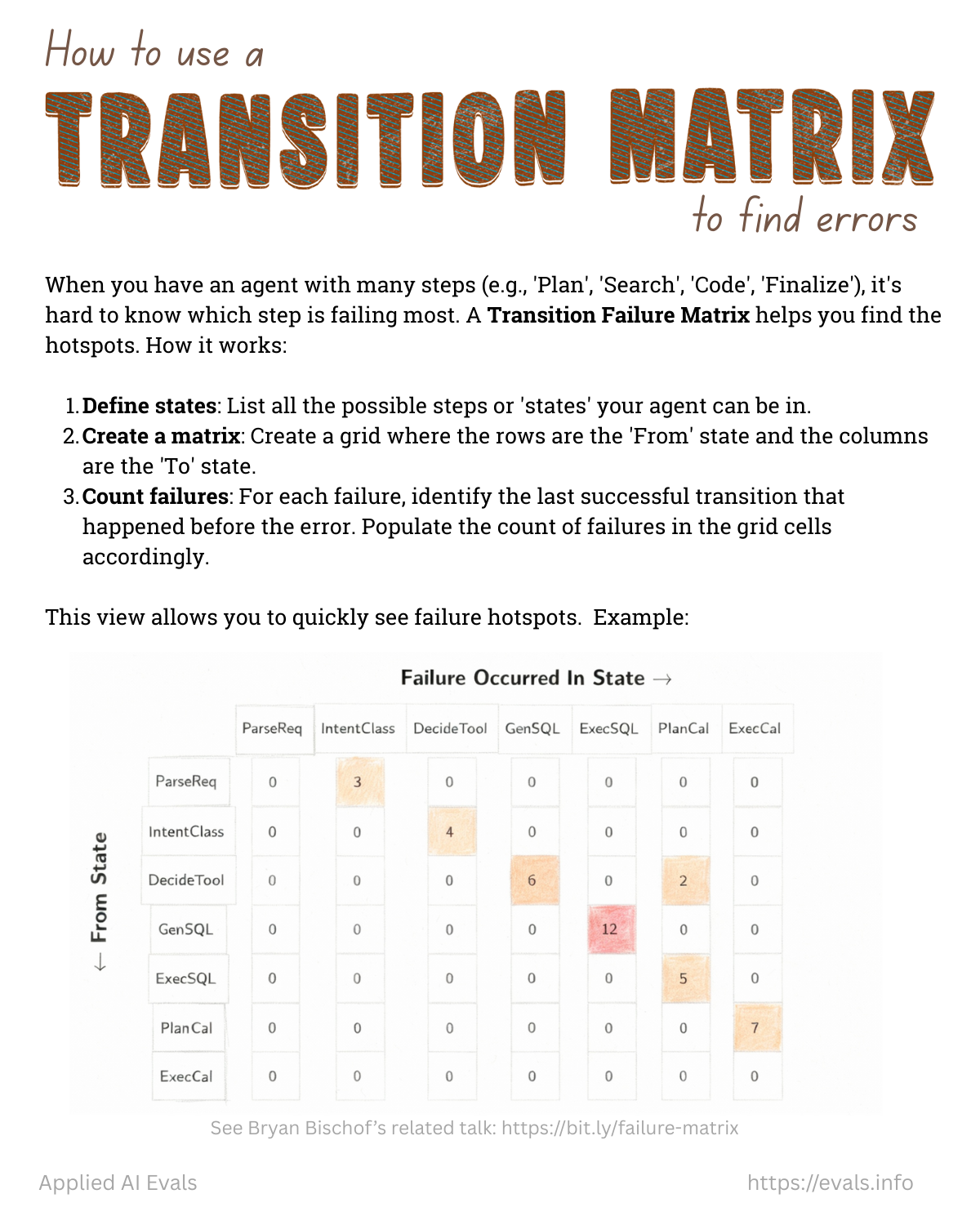
| 11 | Transition matrix | From-state × failure-state counts | Transition Failure Matrix |
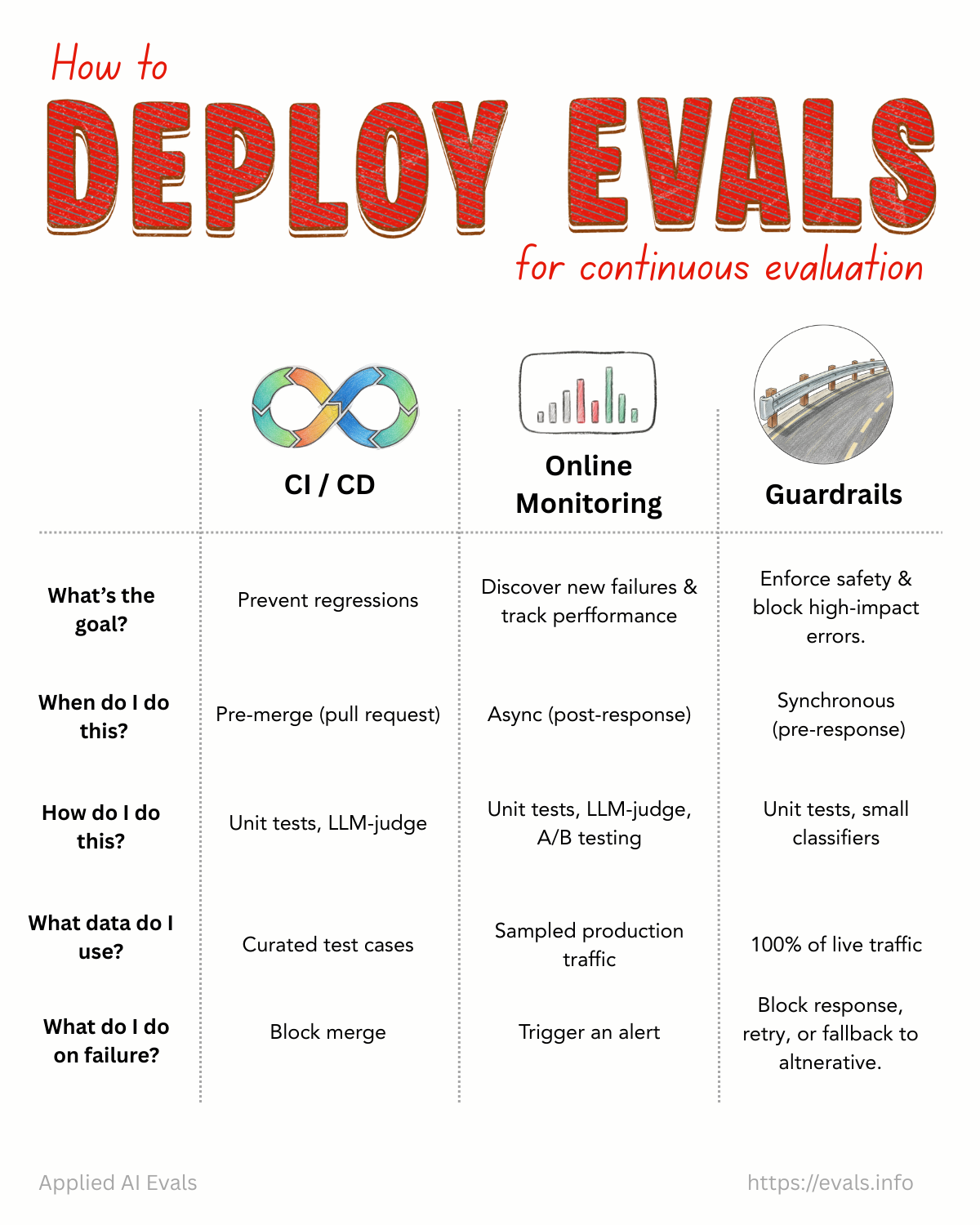
| 12 | Deploy evals | CI/CD vs online monitoring vs guardrails | CI Evals vs Production Monitoring |
All cards